How Is Electrical Power Calculated?
Electrical power is the rate at which electrical energy is transferred or converted by a circuit, device or system. It is measured in watts (W), with larger systems commonly expressed in kilowatts (kW) or megawatts (MW).
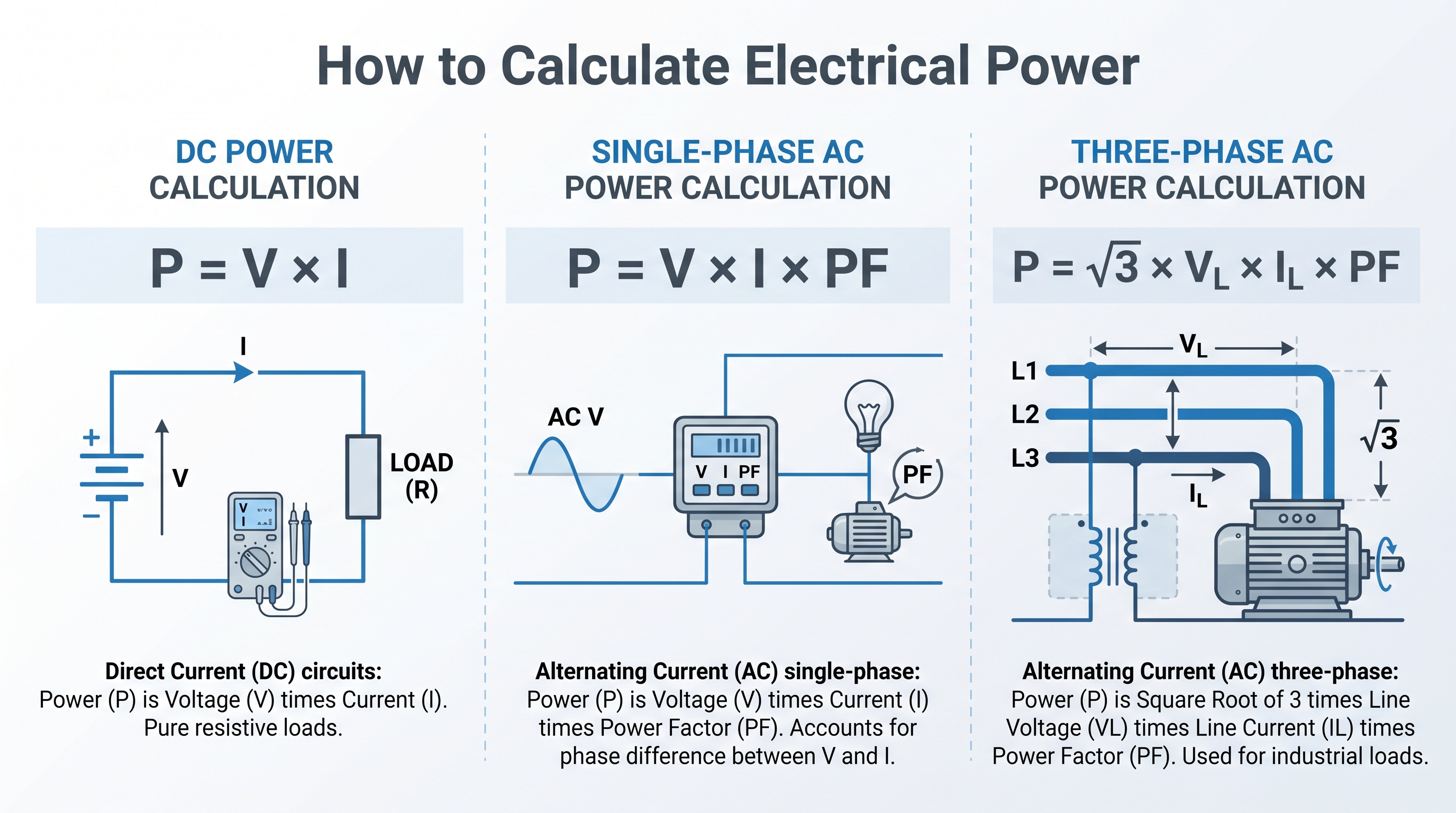
The correct power formula depends on the type of electrical system. For a simple DC circuit, power can be calculated from voltage and current. For AC systems, power factor must normally be considered when calculating real power.
The three most useful formulas are:
- DC: P = V × I
- Single-phase AC: P = V × I × PF
- Three-phase AC: P = √3 × VL × IL × PF
Basic Electrical Power Formula
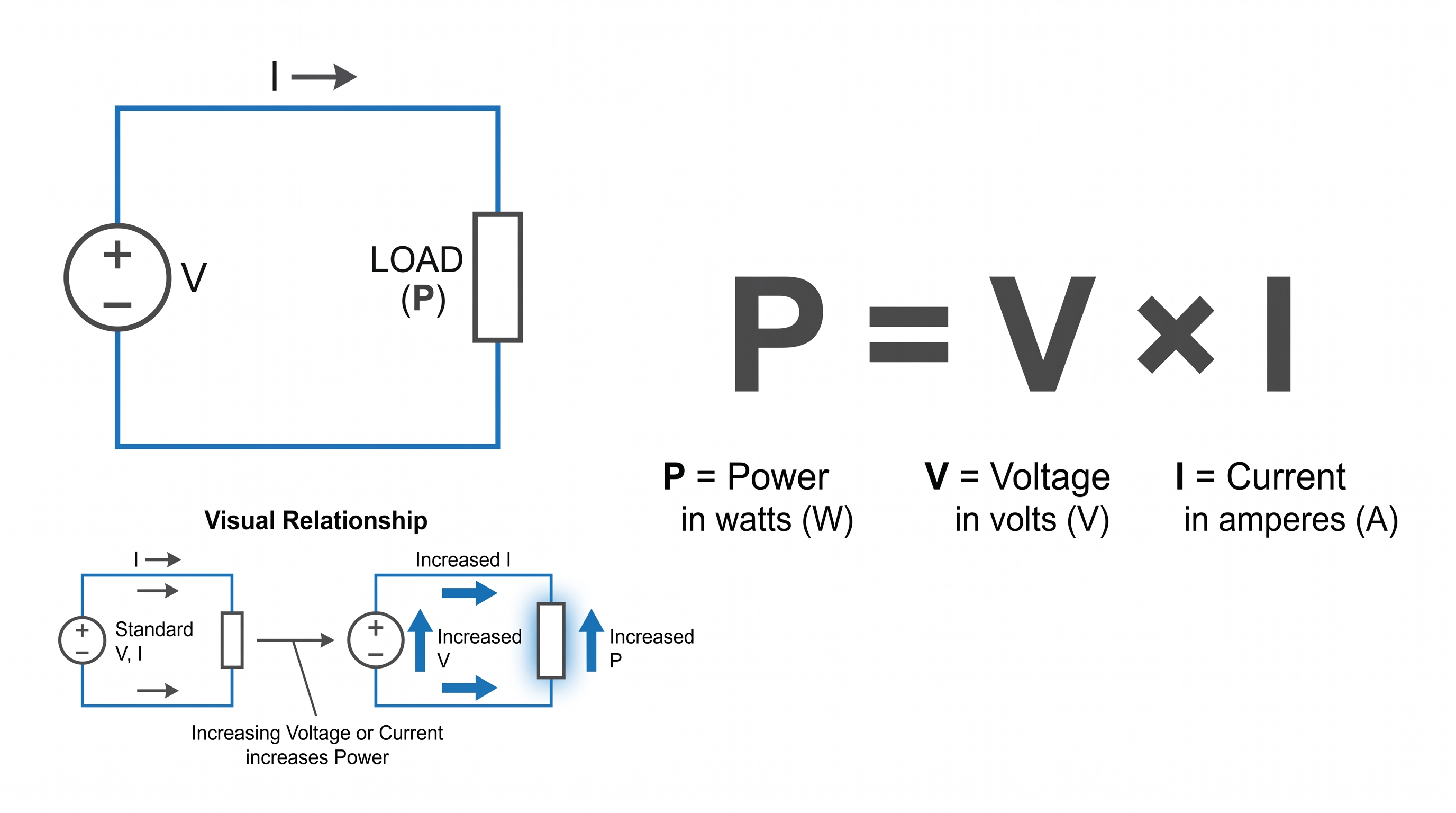
The fundamental relationship between voltage, current and electrical power is:
Where:
- P = electrical power in watts (W)
- V = voltage in volts (V)
- I = current in amperes (A)
This formula is directly applicable to DC circuits. In AC systems, the relationship between voltage, current and real power also depends on the phase relationship between voltage and current.
How to Calculate DC Power
For a DC circuit, electrical power is calculated by multiplying the voltage across the load by the current flowing through it.
Example: DC Load
Suppose a DC load operates at 24 V and draws 5 A.
Therefore, the electrical load consumes 120 W of electrical power.
The same relationship is useful for batteries, DC power supplies, photovoltaic modules and other DC electrical equipment. For a real device, however, its operating voltage and current should be used rather than only its nominal ratings.
How to Calculate Single-Phase AC Power
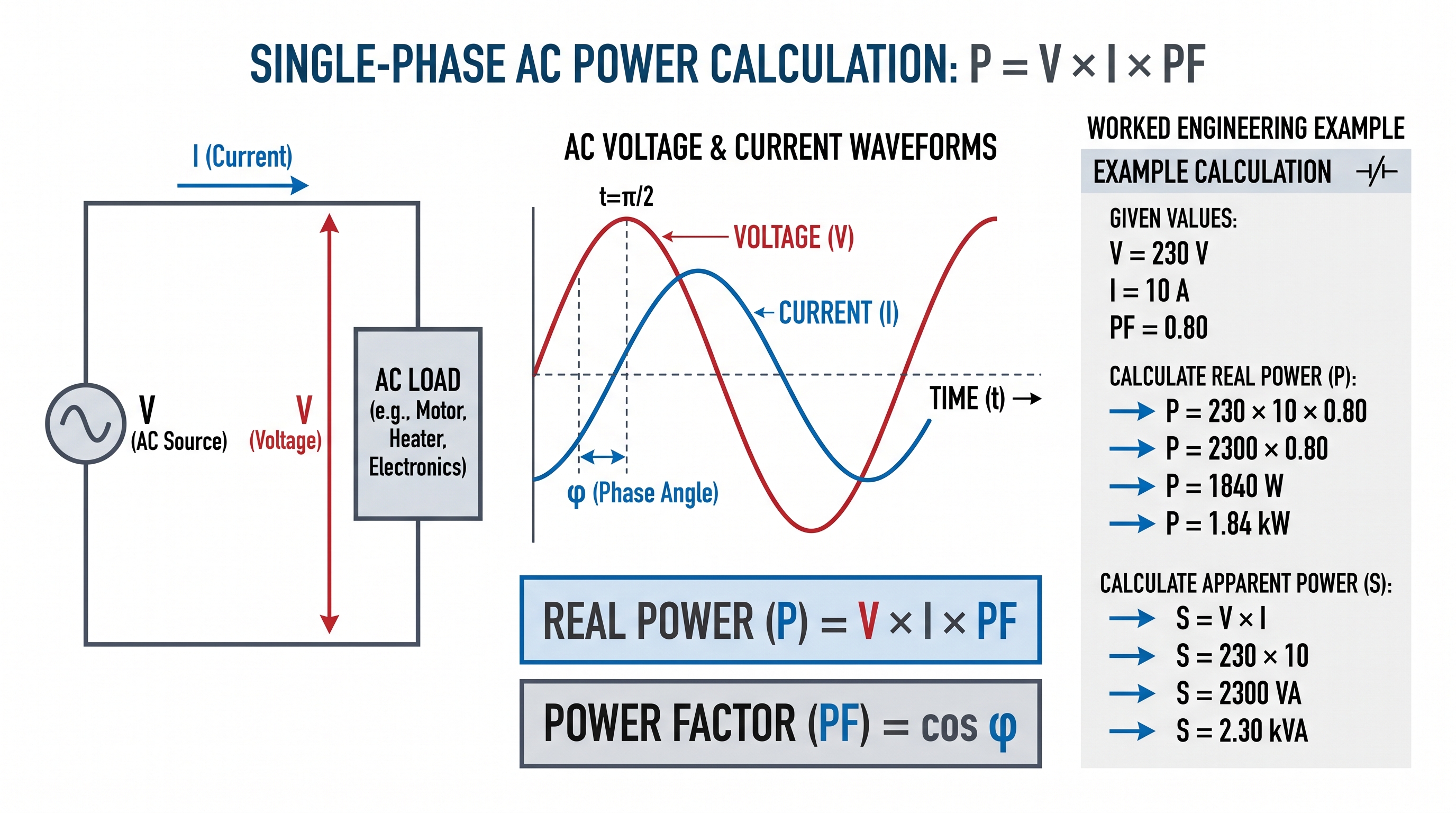
In a single-phase AC circuit, real electrical power depends on voltage, current and power factor. Using RMS voltage and current:
For sinusoidal voltage and current, the power factor can be expressed as:
Where:
- P = real power in watts (W)
- V = RMS voltage in volts (V)
- I = RMS current in amperes (A)
- PF = power factor
Example: Single-Phase AC Load
Consider a single-phase load supplied at 230 V, drawing 10 A with a power factor of 0.80.
The load therefore consumes approximately 1.84 kW of real power.
Its apparent power is:
How to Calculate Three-Phase Power
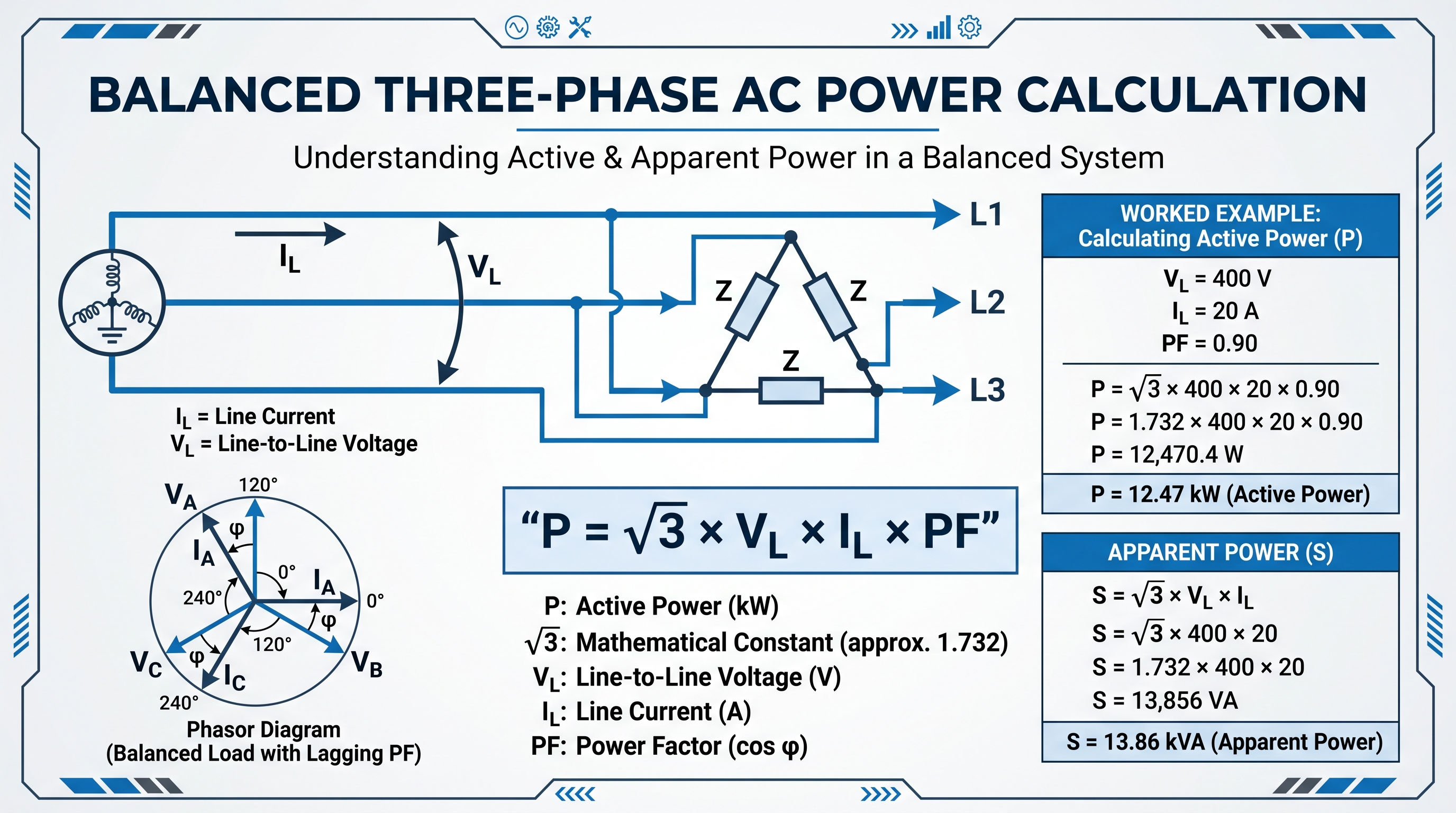
Three-phase systems are widely used for industrial motors, commercial buildings, generators, transformers and utility distribution. For a balanced three-phase system using line-to-line voltage and line current, real power is calculated using:
Where:
- P = real power in watts (W)
- VL = line-to-line voltage in volts (V)
- IL = line current in amperes (A)
- PF = power factor
Example: Three-Phase Motor
Consider a balanced three-phase motor supplied at 400 V, drawing 20 A, with a power factor of 0.90.
Therefore, the motor's real electrical input power is approximately 12.47 kW.
The apparent power is:
Understanding Power Factor
Power factor describes how effectively electrical current is converted into useful real power in an AC system.
For a sinusoidal AC system:
A power factor of 1.0 means that voltage and current are in phase and the apparent power is equal to real power. A lower power factor means that more apparent power is required to deliver the same amount of real power.
Common inductive loads such as motors, transformers and magnetic ballasts can have lagging power factors. Capacitors are commonly used for power-factor correction in suitable installations.
kW, kVA and kVAR
AC electrical systems are commonly described using three related power quantities: active power, apparent power and reactive power.
| Quantity | Symbol | Unit | Meaning |
|---|---|---|---|
| Active power | P | W / kW | Useful real power consumed by the load |
| Apparent power | S | VA / kVA | Combined voltage-current loading of an AC system |
| Reactive power | Q | var / kVAR | Reactive component associated with energy storage and return |
For a sinusoidal AC system, these quantities are related through the power triangle:
Power factor can also be expressed as:
This means that, for a given amount of real power, improving power factor can reduce the current required from the electrical supply.
Worked Electrical Power Examples
Example 1: DC Solar PV Output
Suppose a solar PV array is operating at 500 V DC and producing 20 A.
The instantaneous DC electrical output is therefore 10 kW.
Example 2: Single-Phase Building Load
A single-phase load operates at 230 V, draws 15 A and has a power factor of 0.90.
Example 3: Three-Phase Industrial Load
A balanced three-phase load operates at 400 V, draws 30 A and has a power factor of 0.85.
Electrical Power Calculation in Engineering
Power calculations are fundamental to electrical design and are used throughout residential, commercial, industrial and renewable-energy projects.
Load Assessment
Engineers calculate the power demand of individual loads and combine them to estimate the total connected and operating load of a facility.
Cable and Protection Selection
Electrical current derived from the required power is used together with installation conditions to select conductors, circuit breakers, fuses and other protective equipment.
Transformer and Generator Sizing
Apparent power in kVA is particularly important when sizing transformers, generators and UPS systems because these devices must accommodate both voltage and current.
Solar PV System Design
In solar PV systems, engineers calculate DC power from module voltage and current and AC power from inverter output characteristics. These calculations support inverter sizing, cable sizing, energy estimates and system performance assessment.
Electrical Energy Calculations
Power describes the rate of energy use. To estimate electrical energy consumption, power must be considered together with operating time.
For example, a 2 kW load operating continuously for 5 hours consumes approximately:
Common Electrical Power Calculation Mistakes
Several common mistakes can lead to incorrect electrical calculations.
- Ignoring power factor: Using V × I as real AC power without considering power factor can overestimate useful power.
- Confusing line and phase voltage: Three-phase formulas must use the voltage definition required by the selected equation.
- Mixing units: Ensure voltage, current and power units are consistent before calculating.
- Using nameplate ratings as actual operating values: Equipment may operate below its rated voltage, current or power.
- Confusing power and energy: kW measures power, while kWh measures electrical energy.
Summary
Electrical power calculation starts with the relationship between voltage and current, but the appropriate formula depends on the type of electrical system.
- DC: P = V × I
- Single-phase AC: P = V × I × PF
- Three-phase AC: P = √3 × VL × IL × PF
- Apparent power: measured in VA or kVA
- Active power: measured in W or kW
- Reactive power: measured in var or kVAR
These basic calculations are essential for electrical load assessment, equipment sizing, cable selection, protection design, power system analysis and solar PV engineering.
Frequently Asked Questions
What is the basic formula for electrical power?
For a DC circuit, electrical power is calculated using P = V × I, where P is power in watts, V is voltage in volts and I is current in amperes.
How do you calculate single-phase AC power?
Single-phase real power is calculated as P = V × I × PF using RMS voltage, RMS current and power factor.
How do you calculate three-phase power?
For a balanced three-phase system using line voltage and line current, real power is calculated as P = √3 × VL × IL × PF.
What is the difference between kW and kVA?
kW represents real or active power, while kVA represents apparent power. For a standard AC power relationship, kW = kVA × power factor.
Why is power factor needed when calculating AC power?
Power factor accounts for the relationship between real and apparent power. In sinusoidal AC systems, it is commonly expressed as cos φ.